
Divány
At home with the child: No need for high expectations, just one or two things you can rely on
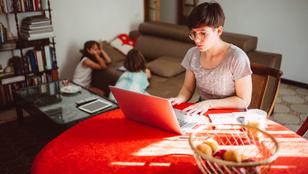
The circumstances caused by the coronavirus are placing enormous demands on parents. Not only do we have to organise childcare during the day and work from home, but we also have to help with their education, as we are essential to making online lessons and independent study possible. However, we cannot become experts in home management overnight.
The situation caused by the coronavirus is extraordinary. It has taken everyone by surprise and calls for swift action. The sudden closure of schools leaves little room for manoeuvreIt’s up to us to plan our children’s home schooling, not to mention looking after them and organising our own work. Social media is constantly bombarding us with various ideas and suggested solutions for managing life at home, but most of these often place an even greater burden on our shoulders. Take, for example, the most popular Covid-19 agenda, which breaks the whole day down hour by hour. It’s not possible to adapt to this seamlessly from one day to the next. Is it even necessary?
Agenda
It is true that a regular daily routine plays a very important role in children’s lives. It helps to create predictability, a sense of time and a feeling of security, all of which are essential for maintaining emotional balance and ensuring the day runs smoothly. However, it is not possible to come up with a schedule from one day to the next that is organised hour by hour and is convenient and easy for everyone to follow. Nor can we expect either ourselves or our children to be able to adapt straight away. Establishing a daily routine is important, yet how we go about it does matter. A routine that leads to constant rushing, tension, arguments and exhaustion will not foster a healthy sense of physical and mental well-being at home. Instead of unrealistic expectations, we’ve put together a few tips for you on how to shape your own daily routine:
#1 Get yourself mentally prepared!
The current situation is difficult and fraught with tension for everyone. Our usual routines have changed for all of us within the family, so we need time and patience to adapt. Yes, there will be difficult, tearful and sometimes agonising moments. This is just as true for our children as it is for us, and that’s perfectly fine. However, if we are counting on these, if we try to accept them and empathise with one another, then things may be resolved sooner – or even resolve themselves.
#2 School closure!
Although education is continuing in some form, the routines associated with school are changing. There is no longer the need to get up at the crack of dawn, travel to school, or have face-to-face contact with classmates and teachers; the way lessons are attended is changing, as are the conditions for meeting academic requirements. As for us parents, instead of being away all day, we are spending more and more time at home, sharing the same space with our children. This is a huge change, and it is not easy to adapt to straight away. That is why it is important to give both our children and ourselves time to come to terms with it. Instead of rushing through changes, let’s allow ourselves a little space simply to be. Let’s talk, share our feelings, thoughts and difficulties with one another before we reorganise the whole family’s life!
#3 A maximum of 3 family rituals, which are non-negotiable
Now that we’re all ready to bring some stability into our daily lives, let’s choose together a maximum of three activities or family rituals that won’t be up for negotiation in future. These will provide one or two stable points in the day. This could be a morning family cuddle in bed, morning yoga, lunch together, an afternoon story time, a day out or gardening… anything that’s important to you, that makes you feel good, and that has a positive effect on the family’s energy. At first, if you manage to do these things on a given day, you’ll already have something to be grateful for and a reason to give yourself a pat on the back.

#4 Study period
When it comes to taking part in online lessons, it’s mostly up to us to adapt, as it’s the teachers who decide when the lessons take place. This can lead to a great deal of uncertainty, especially at the start, as teachers are still getting to grips with the new system. We parents may also need to provide technical support, particularly for younger children. We’ll have to allow for this level of flexibility until the chaos settles down a bit.
Furthermore, however, we are in the fortunate position of being able to organise independent study time as a family. The advantage of home learning is that, given the circumstances, it takes considerably less time to work through the school curriculum. This is because the child can study in their own safe space, without any major external distractions, receiving individual help when needed, and all at a time when they are most receptive. It’s worth scheduling home learning – if we want to save time for ourselves as well – for when our child’s mind is at its sharpest. And this varies from person to person. Some wake up ready to go, others need a whole morning before they’re finally ready to get on with things, and there are those who can really focus late in the evening, when the world around them has quietened down. The better we can identify this time of day for our child, the less hassle we’ll have to deal with.
#5 Playing time
Alongside the learning provided by educational institutions, we must not forget that children learn and develop most through free play. Play provides them with ample opportunity to practise gross and fine motor skills, acquire social skills, make scientific discoveries, become familiar with their own bodies, express themselves artistically and develop a deep to process their feelings. Through free play, they can also practise becoming independent from their parents. It is therefore important that we provide our children with sufficient time, space and opportunities for free play.
Let’s offer them more options and let them choose for themselves. That’s how they learn to take responsibility for their own lives. We don’t have to play everything with them; we just need to set up various options, and then they’ll decide whether it should be painting, jigsaw puzzles, building, drawing, dressing up or something else.
#6 Work
As well as looking after our child, we naturally need to find time for our own work too. When working from home, it’s a good idea to divide our tasks into two categories. Tasks that do not require our full attention (reading emails, writing simple letters, etc.) can be carried out alongside our children’s free play, quiet rest periods, study time or creative activities.
However, for tasks that require serious attention and concentration (online meetings, phone calls, etc.), it is essential that we keep our children away from us in some way. To do this, we need to set clear, strict rules and time slots. These tasks can only be carried out if there is another adult or an older child to whom we can entrust our little one; or if our child is watching a cartoon or is asleep. If any of these conditions are met, then BINGO – let’s get to work!
You can also find more ideas in English at the Avital – PlayPandemic in the guide, if you don’t feel overwhelmed just yet, but don’t forget, this is more than enough to start with! If you don’t get everything right straight away, there’s no need to despair. As we mentioned at the start of the article, It takes time and patience. If even one of our plans has come to fruition, that’s something to be happy about. Tomorrow will bring new opportunities.
Originally published on: divany.hu, 24 March 2020.