
Divány
Emotional education: don’t make these 3 mistakes!

Teaching our children emotional literacy – that is, helping them to recognise, articulate, experience and express their inner feelings in a socially acceptable way – is a fundamental parental responsibility. But how we go about doing this does matter!
Just as these days the emotional intelligence Its importance also appears to be growing at a societal level, with parents and teachers beginning to pay increasing attention to children’s emotional development. It is now clear that the ability to recognise and accept our emotions is essential for regulating our behaviour and for connecting with others in an appropriate way. How well we cope with our emotions is reflected in our self-esteem, our relationships and our success in life.
Those who did not receive sufficient support as children to develop this skill are forced to face many difficulties as adults. The emotional upbringing of our children – that is, teaching them to recognise, articulate, experience and express their inner feelings in a socially acceptable manner – must be a fundamental parental responsibility. But how we go about it does matter! We can help a great deal by setting a good example, discussing events and accepting emotional expressions, but anything associated with external pressure or coercion can backfire. To help us recognise these approaches ourselves, we’ll now outline the three most common mistakes:
#1 I’ll let him do it, but not myself!
It’s always a bit easier to let our children negative emotions our own lives as much as we do for ourselves. As parents, it is natural that we want to appear rock-solid so that they feel safe in our presence. However, our emotions are never a secret from our children. They are incredibly sensitive to our moods, so the only thing we can deny them is the acknowledgement or true interpretation of those emotions – which, in turn, only serves to confuse them. If we do not allow ourselves to express and experience our own difficult feelings, our children will not find it easy to do the same, since the from our behaviour They learn more than just from our words as teachers. As well as accepting our children’s emotions, it is always important that we monitor ourselves too, so that we can recognise how we ourselves experience similar emotional surges. Parenting is never a one-way street; our example depends not only on our advice, but also (and perhaps primarily) on our behaviour.
#2 Disengagement and Coercion
When we talk about experiencing emotions, the concept of distraction often comes up. The reason for this is that our general approach to negative emotions tends to be one of consolation and distraction – in other words, attempts to take our minds off things – but these actually hinder the experience of the emotion and, consequently, any sense of relief. Even more enlightened parents sometimes mistake something for distraction when it is not, in fact, distraction at all.
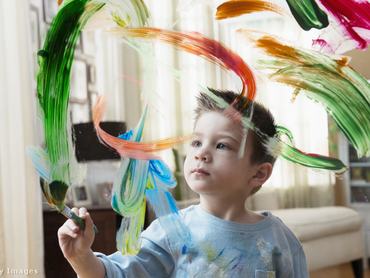
Children sometimes choose not to express and experience their emotions through crying, tantrums or verbalising them, but rather through a particular play or artistic activity, or perhaps by reading a story. From the outside, it may seem as though they are trying to distract themselves, but in reality they are simply engaging in a personalised processing method They choose for themselves. We must not prevent them from doing so, for as soon as the expression of emotions becomes forced and controlled, it loses its power to relieve tension. We simply need to create the opportunity for them to express their emotions! Exerting pressure is of no use whatsoever.
#3 Open-ended questions for young children
Most support professionals favour open-ended questions: What happened? How did this affect you? How do you feel now? Why did you do that? This approach helps, on the one hand, to avoid short (‘yes’ or ‘no’) answers and, on the other, to ensure that we do not influence the response in any way. This is also the recommended approach for communicative children with a sufficient vocabulary (from nursery and early primary school age), though it is not necessarily effective with younger children. In early childhood, children – lacking knowledge and experience – often do not even know themselves what they are going through and why, so they are unable to answer our open-ended questions. That is why it is important that our questions provide them with a point of reference and suggest that we have some idea of what is going on: I can see you’re upset that she can’t stay with you, can’t you? You wanted Mum to stay a bit longer, didn’t you? Are you scared of something? You’re a bit cranky – maybe it’s just because you’re tired? These questions reflect acceptance (which in itself helps to ease tension) and help us to work together to identify cause-and-effect relationships that the child may not yet be able to work out on their own. If, however, we get it right, they’ll probably give a big nod and immediately feels relieved!
Supporting children in experiencing their emotions plays an important role in healthy personality development, but as parents it is not always easy to find the right approach. Particularly if we lack our own childhood experiences, it is certainly possible that we might fall into one of these pitfalls. Time and time again. The aim, however, is to recognise these mistakes! Let’s engage in self-reflection and monitor our own behaviour so that we, too, can grow. After all, we cannot set a better example than for our children!
Originally published on: divany.hu, 26 September 2021.