Divány
One moment they’re having a tantrum, the next they’re laughing – is it normal for a child to switch moods so quickly?

One moment they’re screaming at the top of their lungs, and the next they’re laughing out loud or calmly carrying on with their drawing. Is this normal? Young children (aged 2–4) in particular can astound us with the extremes of their mood swings. It’s often almost comical; you can’t take it seriously. Yet for them, it can still be very real.
One remarkable aspect of our children is their ability to bring about surprisingly sudden and extreme emotional shifts in their behaviour. They often emerge from a heart-wrenching tantrum with the lightest of laughter, whilst at other times, carefree laughter can turn into heart-rending tears or angry aggression. This type of impulsive behaviour often seems shocking, as it is as though the child is merely putting on an act and over-dramatising the situation. This emotional instability gives adults the impression that the children do not take their own feelings seriously – after all, they would not be able to switch so easily otherwise – and that they are merely acting erratically because they do not know what they actually want.
Whilst it must be acknowledged that ambivalence is not an unfamiliar feature of early childhood (0–5 years), this does not make the intensity of their emotions any less real. The extreme and sudden shifts in their emotional state also demonstrate that they experience the moment as it is, and if they are not hindered, they can easily move beyond it. There is no clinging, nor any emotional bondage arising from repression. And this is a quality that might well do us adults some good too, as it certainly brings significant long-term benefits.
Children live in the present
Young children still find it difficult to come to terms with the concept of time. They lack both a sense of time that would enable them to keep track of the passage of the day, and the ability to attach precise meaning to it, which would help them to understand the concept of time itself. They are able to truly experience the present, but in the broadest and deepest sense. They are not attached to anything other than the present moment.
When we tell them some good news – for example, that we’re going to the play centre today – we can generally expect two types of reaction: either they jump up straight away and from then on keep asking when we’re finally going, or they pay no attention to the news at all because they’re completely absorbed in playing on the carpet. Whatever they want, they want it first and foremost „right now”, whether it’s a visit to a play centre or quiet, independent play at home, and their emotional outbursts reflect this.
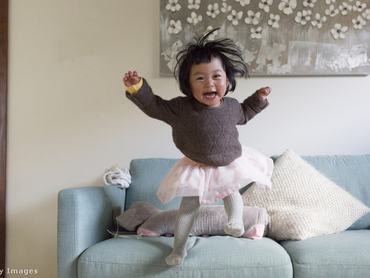
In early childhood, the number and intensity of distinguishable emotions increase relatively suddenly, which is why children are powerless to control how they experience them. When a stimulus arises, the emotional reaction follows almost uncontrollably. At the same time, it is precisely this early lack of coping mechanisms that allows the emotions arising within them to truly be released, so that they can be genuinely experienced. The significance of this is by no means trivial, because emotional barrenness, instability and repression in adulthood stem precisely from these fleeting experiences being hindered or suppressed at an early stage. It is hard to believe, but the more we allow our children space to express their fleeting feelings – indeed we confirm the more easily and quickly they can move on from them. For they live in the present; they have no reason to cling to the past until they learn this from our example.
We all need emotional education
We are sentient beings; we are born as such, yet our methods of upbringing often seem as though they are designed to eradicate precisely this from us. It is as though all these feelings, and the relationships, interpretations and influences they give rise to, were of no use. The emotional intelligence However, it plays a very significant role in practicality and resourcefulness.
Our understanding and knowledge of emotions influence our relationships, our communication, our self-awareness and, through these, our entire world view and our sociability. When our children are disappointed, they let off steam and move on, sometimes in the blink of an eye; we, on the other hand, are capable of days, months, or even years of self-tormenting, silent (but never invisible) brooding. This is how we become our own worst enemies. Are we really sure this is what we want to teach our children?

Feelings cling to us as long as we deny them, suppress them or feel ashamed of them. And this is a behaviour we learn. The younger our children are, the more whole they feel, the more accepting they are of themselves and everything that goes with it. That is, until our parental feedback suggests otherwise. Our reactions have a huge impact on them, as they learn from us how to view and perceive the world – and, within it, themselves. Emotional education should not teach us to suppress our feelings, nor should it discourage us from setting boundaries on how we express them. First and foremost, it provides insight that helps us recognise what we are going through right now and why, thereby offering an opportunity not only for acceptance but also for choosing a more conscious way of expressing ourselves.
The fact that young children, living in the moment, throw themselves on the ground does not, of course, mean that we should do the same. Recognising the emotions that trigger this behaviour is nevertheless crucial, because it reflects acceptance and provides insight, which in itself offers relief. And if we approach them with understanding, they too will be more open to working with us to change their current, perhaps socially less acceptable, way of expressing themselves. We may disapprove of the behaviour, but not the feeling. That is always genuine, whether it comes from a child or an adult. So let us allow our children to express their emotions, and by learning from them, Let’s treat ourselves to it too.
Originally published on: divany.hu, 23 April 2021.