
Divány
The child is hitting their own head. Is that normal?

Around 20 per cent of young children exhibit this pattern of behaviour from time to time, mostly between the ages of 18 and 24 months. There is no need to be overly alarmed by this, but it is certainly worth taking note of it and providing appropriate support to prevent more serious risks and the development of dysfunctional behaviours.
Even in early childhood, we may find that our child is harming themselves. They pull at their hair, slap their face, or – perhaps most commonly – bang their head. At mealtimes, they bang their head against the edge of the table; when it’s time to leave, they pound it against the floor; and in a fit of defiance, they bang it rhythmically against the wall, sending shivers down our spines. Even this relatively mild form of self-harm is an extremely worrying sight for a parent. We’re afraid that our child might hurt themselves, and also that perhaps something isn’t quite right with their development.
Given that self-injury is also listed among the symptoms of autism, for example, we may be reluctant to diagnose it; however, when it occurs in isolation (without being accompanied by other symptoms), this association cannot be considered characteristic. Around 20 per cent of young children exhibit this behavioural pattern from time to time, mostly between the ages of 18 and 24 months – that is, when their motor coordination is beginning to become quite well-developed, whilst their communication skills are still severely impaired. The real reason for head-banging is primarily to relieve internal frustration, which they generally outgrow as they develop, by the age of 4 at the latest (though usually sooner). We need not be overly alarmed by this behaviour, but it is worth taking note of it and providing appropriate support to prevent more serious risks and the development of harmful behaviours.
The paradox of pain induction and pain perception
Children instinctively know that inflicting physical pain can alleviate either internal emotional distress or another form of physical pain. By harming themselves, they divert their internal attention away from the problem at hand (the brain enters a sort of instinctive emergency response), which results in the tension in the affected area being relieved. For example, when teething or suffering from an ear infection, they may try to make the pain bearable by rhythmically tapping their head.
The situation is similar when they are struggling with some kind of emotional difficulty. Children whose speech is still impaired (due to their age), in particular, tend to resort to this mechanism easily. As they are unable to adequately recognise, interpret or articulate what feelings These feelings swirl within them; they feel powerless in the face of them, and their inner frustration only grows. Self-harm can serve as a means of releasing this, as it is predictable, controllable and also has a calming effect. Finally, we can also expect this behaviour to occur when a child is exposed to too many stimuli. If they do not have enough time and peace of mind to process the events affecting them, they will eventually be forced to ‘explode’, and banging their head may be a modified version of this. In all three cases, therefore,
We are talking about a form of self-reassurance, the prohibition of which runs counter to the child’s best interests.
If, however, we understand their underlying need and put forward a similar but more acceptable proposal, we can make things a great deal easier for all of us.
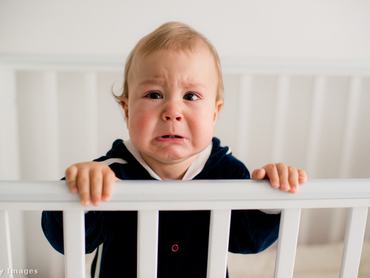
Is he begging for attention?!
We might also ask ourselves whether there is more to this unwanted behaviour than simply seeking our attention. Children are indeed capable of doing almost anything to gain their parents’ much-needed attention, but they base their methods on what they have observed. A child does not start banging their head against the floor or the back of a chair because they crave attention, but because they are frustrated. It is another matter entirely, however, that if we are visibly alarmed by this behaviour and rush to protect them with concern every single time, they are likely to draw conclusions from this that will shape their future behaviour. If self-harm (meaning solely the behaviour discussed in this article) is effective enough at jarring us out of our current state of mind, they will resort to it again whenever they crave our attention.
With this in mind, it is very important to distinguish between two things: when he does it out of frustration, and when he is deliberately trying to provoke us.
In the latter case, the more importance we attach to it, the more we reinforce this behaviour. If, on the other hand, the former scenario applies and we react dismissively towards them, we are effectively convincing them that they cannot count on us in times of trouble. It is not always easy to strike the right balance. However, it helps if, in most cases, we remain neutral (without getting worked up) whilst still being compassionate.

Tips for speeding up the fading of a behaviour
#1 Try to notice in what situations this happens! Is it a sign of discomfort, tiredness, hunger, social conflicts, teething or some other physical pain? If you know what it might indicate, it’ll be easier for you to stay calm.
#2 Stay calm and be understanding! This behaviour is common in early childhood and usually wears off on its own if we don’t make too much of a fuss about it. Help them understand – and even put into words – their feelings, and as long as they’re not in any danger, let them let off steam!
#3 Suggest a less painful solution! You can also help them by acknowledging their feelings and suggesting an action that is similarly intense but less dangerous: slamming their fist on the floor, burying their head in a pillow (perhaps screaming into it), or even stamping their foot. This way, they can release their tension, and they’ll also feel your acceptance.
#4 If you’re unsure, consult a professional! You may not be sure whether you’re handling the situation properly. In such cases, never be afraid to ask an expert for help!
#5 If it hasn’t worn away by the age of 3, be sure to consult a specialist! This is the behaviour Essentially, it occurs intermittently and is quite common in early childhood; however, in the longer term, it may be a sign of other disorders, so it is important to take it seriously. Although it sometimes resolves itself by the age of 4, it is definitely worth looking into after the age of 3 and seeking a specialist’s opinion on what has been observed and what further action should be taken!
Originally published on: divany.hu, 10 July 2021.