Divány
Should I study with my child – or how can you support your Year 1 child?
Even the expectations of Year 1 can put a great deal of pressure on children’s minds, and it is up to us, as parents, to help them cope with this and maintain a sense of balance. We can achieve this not by spending long periods studying together, but rather by creating as many opportunities for free play as possible. There’s no need to worry. This will actually help them to absorb what they need to learn more effectively.
Starting school for the first time brings about major changes and a whole host of new responsibilities, not only for the child but also for the parents. As the transition from nursery to school is generally neither easy nor gradual, a great deal of pressure can be placed on the young children’s minds, which we, as parents, are obliged to alleviate and keep in balance. This is no easy task; it is difficult to strike the right balance between the amount of support and the level of discipline needed to maintain their interest whilst ensuring they are given an appropriate workload.
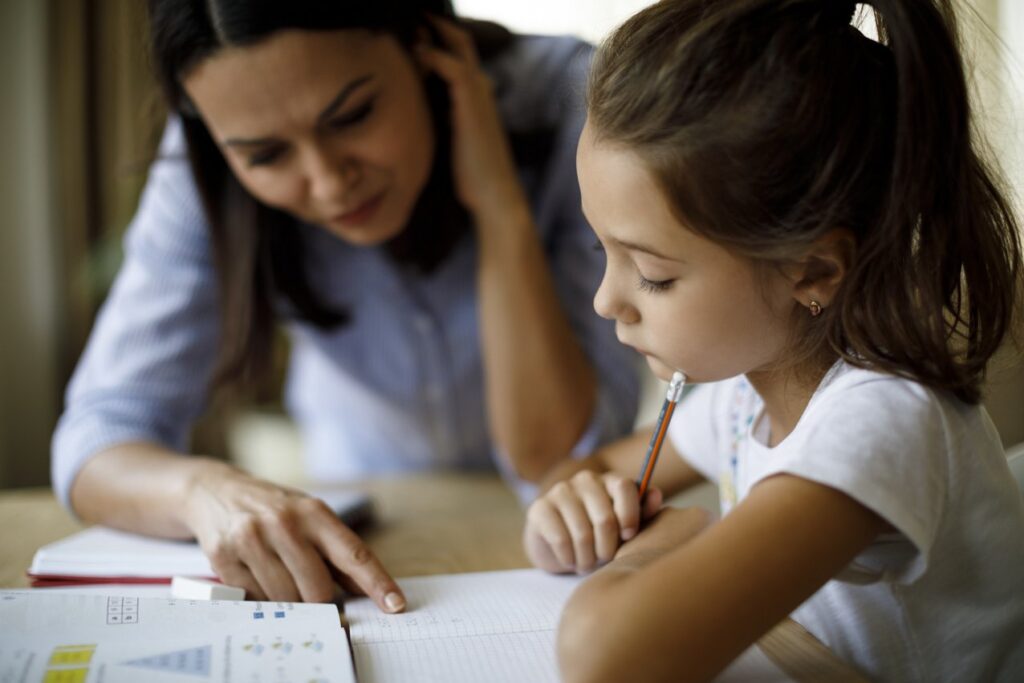
The extent to which we should be involved in our child’s home learning, and to what extent we should let them tackle the challenges set by school on their own, is something that warrants careful consideration. We all surely have memories of what it’s like when parents, or perhaps grandparents, try to tutor their children. It rarely turns out well. At the same time, it is often the teachers themselves who instruct us to go through the work with our child, have them read it aloud, and quiz them on it. Undoubtedly, this is the most obvious solution, but this arrangement can very easily and quickly turn into criticism and arguments, which can lead to a serious emotional rift between parent and child. According to current scientific research, success in life is based less on a child’s initial academic performance and more on the quality of their relationship with us.
Vekerdy has already said as much
„The worst tutor, the worst home tutor for our children, is always the parent themselves. It is our own child who annoys us the most whilst doing their homework, as we have been learning alongside them practically from the moment of conception, right up until they leave home – or perhaps even longer,” writes Tamás Vekerdy From little ones to grown-ups in his book entitled ….
Indeed, together with our children, we learn about life, human relationships, and, through them, about ourselves as well, which in itself creates regular (positive and negative) tension. If we also want to take an active leading role in helping them tackle the challenges they face at school, our relationship will suffer, as it simply cannot cope with that much. For many parents, doing the work instead of their child – or nagging them into doing it – is too much, but giving the child focused attention at home after school is also too much. We all let our guard down at home, in the safe family environment; it is here that we lose our patience and perseverance, which quickly leads to conflict.
And those early negative memories have a decisive impact on a child’s later academic performance. Year 1 is – or at least should be – all about sparking curiosity, practising how to focus one’s attention, and introducing new information and ways of thinking in a light-hearted manner. And the means of processing these experiences afterwards should still be free play and physical activity. Unfortunately, very few schools are currently able to provide the latter, so as parents, this is perhaps where we can offer the greatest support. A sufficient amount of free play at home will help not only to deepen the parent-child bond, but also to sustain the child’s innate thirst for knowledge.
Let them ask questions, play and move about!
What sort of learner our child will become depends largely on the experiences they have at school and at home from the very beginning. It is up to us to help make the transition from the playful environment of nursery to school life – with its high expectations and the need for focused attention – a smoother one.
Let’s encourage their curiosity and reinforce the trust we have in them. Let’s create a suitable environment for learning, and of course, at the start, let’s be close by for a while, but let’s not focus our attention solely on them. Let’s give them time to think for themselves, and let’s be (quietly) open to any questions that arise. Let’s be pleased when they ask questions, and let’s be happy to help when they do, but only as much as is absolutely necessary. Let’s try to identify the so-called ‘zone of proximal development’, that is, a distance of just one step from the child’s current level of development. It is most motivating for all of us when something seems just just out of reach. Failed attempts are therefore very useful, as they teach children to explore without causing them demotivating disappointment.
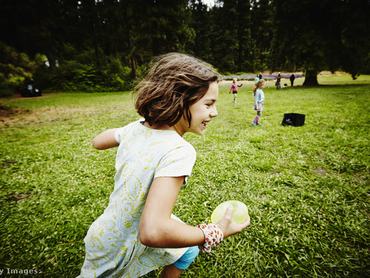
Home learning should ideally not last longer than an hour. At this age, it is far more important to ensure that children have time for free play and physical activity, through which they can process their newly acquired experiences in an indirect way. Their brains need more oxygen, which is supplied by the freedom of movement in the open air guarantees. Let us not forget that this age group still – albeit indirectly – consolidates what they have seen and heard most effectively through self-directed play. However, it is up to us, as parents, to be aware of this, and therefore it is up to us to stand up for it, because our education system and the overworked and, in many cases, powerless teachers working within it will not (cannot) help us in this regard. We must believe that this is enough for now!
And if private tuition does turn out to be necessary in Years 3 or 4 – even for bright children – then let’s leave it to someone else! It’ll be better for all of us that way!
Originally published on: divany.hu, 17 August 2021.