Divány
Is your nursery-age child swearing? There’s an effective solution – but it’s not punishment

Swearing appeals to children because it is a new way of expressing tension – and, what’s more, it’s forbidden. However, if we turn it into a game in the safe environment of the home, they won’t feel the urge to embarrass us in public.
Around the age of four, children are keen to master the art of swearing. Even if we take care at home to speak politely and respectfully, it is almost inevitable that our pre-schooler will, somewhere, overhear some nasty words that pique their curiosity. And this is understandable, as they have an innate urge to learn new things and to understand more about the world around them – a world in which swear words are now an integral part. Swearing is appealing to children because it is a new way of expressing tension – and, what’s more, it is forbidden. It usually causes parents to react with shock or a change in mood, and this in itself is tempting for a child in Dackorszak who is eager to assert their independence.
This, too, is a stage in the development of self-regulation. Whilst, initially, crying and biting are usually the most obvious means of self-expression and stress relief for infants, as they grow older these are replaced by flailing and kicking, that is, the sufficiently conscious use of their limbs, which is ultimately followed by a leap in speech development, and thus verbal aggression.
Whether we like it or not, learning swear words is the most basic pooFrom milder language right through to far more explicit and crude expressions, this is to be expected – and, in a way, inevitable. Although children’s lives are just as full of tensions as ours – albeit in a different sense – they have far fewer opportunities to express and experience these tensions than we adults do. We can talk things through and share them only with someone we know will listen with understanding, but our children face greater barriers both in terms of communication and social interaction.
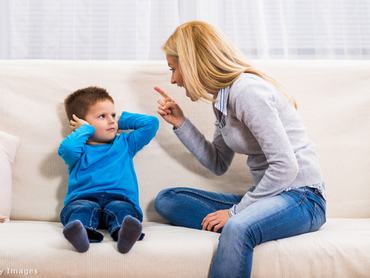
If we want to, we can go to a boxing session or for a run in the woods to, so to speak, work off our pent-up energy, but we don’t want our children running about the flat and hitting people or things. For them, the most effective solution would be to channel their tension through free play, but we often prevent them from doing even that by instructing them to use their toys for their intended purpose, which also includes using appropriate language. At some point, they are bound to go against our expectations. Disciplinary measures are rarely effective in stopping swearing or foul language, as we simply do not have the means to control it adequately. Here – just as with eating – the child is their own master, and they make this clear. That is precisely why our only chance of dealing with swearing in early childhood is to turn it into a game!
Why should swearing be a game?
Children are drawn to using swear words for a number of reasons. On the one hand, they want to expand their vocabulary, understand the meaning of expressions used by others, and learn the appropriate contexts in which to use them. On the other hand, they want to experience the effect this has on both those around them and themselves. Whilst swearing elicits various emotions and reactions from others, it also allows them to express their own feelings and it can help them let off steam; in other words, it certainly suggests a certain kind of power, which strengthens their healthy self-confidence and, through that, their independence as well.
If a parent constantly forbids and punishes bad language, whilst at the same time feeling extremely uncomfortable, embarrassed and helpless whilst all this is playing out in front of an audience, this instils such a sense of power in the child that the adult will have no chance of countering it, whatever disciplinary measures they may employ. In contrast, if at home, in an emotionally safe environment player If they have the opportunity to express their interests and needs of this kind on a regular basis, they will have no need to bring shame upon us in public.
How can we turn this into a game?
If we want to take the focus off bad language, the first and simplest way to do this is to repeat the word incorrectly. When our child says an undesirable word, we simply swap a few letters in it, creating a new, funny word (vöcsök, lüke, tata), and repeat it as if we’d misheard it. This usually makes the child laugh, which relieves the tension and, incidentally, usually diverts their attention as well.

Another effective approach might be to pretend that one of the soft toys has swore, and to tell it off for it (even if we exaggerate a bit). This way, the child can practise without feeling emotionally threatened (which would only increase their inner tension), whilst still being confronted with the social consequences of their behaviour. If we feel that the child really has a lot of frustration to work through, it might be a good idea to have „swearing sessions” at home, during which, for a set period of time (and in a specific setting), they can swear to their heart’s content, thereby letting off some steam.
At home games, and our neutral (empathetic) behaviour helps the child to remain true to themselves and curious, whilst letting go of the need to annoy us with their behaviour. The our communication It allows them to experiment with pushing boundaries in a safe environment, whilst also preparing them for the fact that swearing in public places will result in disapproval. We can discuss with them that, if they feel a strong urge to swear, they should whisper it in our ear instead, if they wish to avoid an unfavourable reaction from others. All of this is practice – an education in life and in weighing up their decisions. Play is a child’s classroom, and the experiences they have there help them to learn and accept the rules of life. Let’s give them the space to do this, and we’ll see that experiences gained in a safe environment will provide useful lessons that will serve them throughout their lives.
Originally published on: divany.hu, 28 May 2021.