Divány
Beyond bullying: how social media can harm children

Young people today start using social media very early on, and even young children navigate video-sharing platforms with considerable confidence. We are allowing them to enter a world that we ourselves do not really understand, and for that very reason we are unable to monitor it to ensure their safety.
Most children today grow up surrounded by screens. Even as babies, they often look up at a smartphone whilst their parents take photos and videos of them, and they are introduced to the captivating images of animated stories and music videos at a very early age. These children are growing up differently from their parents: for us, the world was not yet so fast-paced, vibrant and influential, and it is precisely this generation gap that could pose serious problems.
Today’s digital and online world is evolving at such a pace that it is not easy for parents to keep up. We are aware of the benefits to a certain extent, and we may have some idea of the drawbacks too; yet, as consumers, our lack of knowledge is greater, and this also has a major puts them at risk. These days, everyone, regardless of age, is online almost immediately. A photo of most newborns and babies is posted on Facebook or Instagram, 3- to 4-year-olds can watch YouTube on their own tablets, whilst primary school children very quickly become active on several social media platforms (and not primarily on Facebook). We are allowing them to enter a world that we ourselves do not really understand, and for that very reason, we cannot control it properly. Indeed, as cyberpsychologist Mary Aiken puts it Cyber Trap In his book entitled: „Neither end of the online pool is shallow.”
We are the product
When the topic of children’s vulnerability online comes up, most of us are most concerned about harassment or scams from strangers, or simply screen addiction. These are important risks that need to be addressed, but unfortunately, online social spaces harbour far more predictable dangers inherent in the very way they operate – yet few of us are aware of this.
The recently published Social dilemma ((The Social Dilemma) In the documentary *[Title]*, those who have actually worked on the development teams of the biggest tech companies (Google, Facebook, Twitter) shed light on the influence these platforms exert. According to them, whilst these products were created with the best of intentions, they have now taken a frightening turn. The programmes are powered by algorithms that monitor, track and measure all our online activity. They record which videos you’ve watched, whose photos you’ve viewed, for how long, and what kind of notification prompted you to pick up your phone… Based on this data, they create a model or avatar of us; by constantly updating this, they form an increasingly accurate picture of who we are, get to know our habits and feelings, and thus try to keep us glued to the screen even more. All this is done purely for the profit generated by the adverts on the platform. The competition is for advertisers, to whom we – our attention – are sold, because, thanks to algorithms, they understand how we function emotionally and psychologically better than anyone else. And we are not preparing our children for this.
The extent of the influence
Digital devices affect us and our behaviour in many different ways. Research demonstrate, for example, that fast-paced cartoons and animated films overstimulate the still-developing brains of children under the age of 5 their brains. These factors reduce children’s creativity and independence, and by the time they reach school age, the incidence of attention and concentration difficulties may increase. To be precise, every single hour storytelling (or watching other videos) can increase this risk by 10 per cent. Just think about how often we hand our children a digital device on which they can watch YouTube videos with adverts – and perhaps on continuous playback – almost without limit? Yet data collection, model updates and the resulting increase in our susceptibility to influence do not disappear here either.
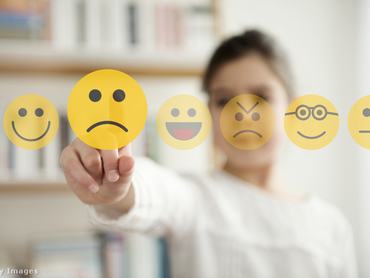
The situation is becoming even more challenging for primary school pupils and teenagers, as they are even less able to be shielded from the digital and online world. Nowadays, the vast majority of primary school children have a mobile phone (and a smartphone at that), which is essentially intended to ensure their safety and give us peace of mind. However, apart from calls and text messages, everything else is also accessible to them, without any particular guidance. They play online games, watch videos and visit social media sites (Instagram, Snapchat, TikTok), all of which they do in every spare moment they have. Fewer and fewer of them are able to cope independently, without the aid of devices. For them, life happens online – and they don’t want to miss out on it – yet they don’t realise that this isn’t real life.
Justin Rosenstein, a former engineer at Facebook, was involved in creating the „Like” button. Their aim was to increase positive reinforcement, yet now teenagers are suffering from severe depression because of it, as they do not receive ‘enough’ likes. Nowadays, teenagers look to the online world for feedback to help shape their self-image. However, due to the sheer volume of platforms, adverts and profiles that create illusions, they are exposed to enormous risks.
It may also be worth bearing in mind that, because of the ease of online chatting, our children may increasingly lose the habit of face-to-face interactions. Chat rooms lack facial expressions, body language and other forms of metacommunication, and as a result, children’s ability to recognise emotions may also be weakened. But life continues to take place offline; this is where our children will have to hold their own, and how well they acquire these skills will play a major role in their success. The world of the internet has brought about a major change in our lives, yet few of us are able to adequately assess its negative effects, and even fewer know how to counteract them. Even those who know exactly how this world works can easily become addicted. The best we can do, therefore, is to stay informed, gain knowledge, and try to protect our children as much as possible.
A parent’s responsibility
We are not all-powerful, so we cannot protect our children from every harm, but neither can we shirk our responsibility. We continue to play the most important role in this regard. The example we set, the conversations we have with them and the sensible rules They will provide the primary protection for children. It is up to us to find out how this new world works and how we can exercise a certain degree of control over it.
We can watch films on this subject (including the one mentioned above) or read books to gain a clear understanding of what we’re up against and how best to protect our children. At present, there is no programme that can reliably filter and regulate children’s content consumption on various websites. Although YouTube has launched a ‘Kids’ version, this is not yet available in Hungary. Facebook does offer a parents’ portal where we can find information on the subject, but we must recognise that these companies will not solve the problem for us, as this is not their primary objective. It is up to us to build the right relationship with our children, to foster and lay the foundations for that close bond which allows for open questions, discussions and conversations on the subject. This will equip them, in time, to interpret and weigh up situations for themselves, and to make sensible decisions to protect themselves and others.
Originally published on: divany.hu, 15 October 2020.